How to Clean a Fibreglass Pool: Step-by-Step Guide for South Coast Pools
A simple daily, weekly and monthly routine to keep your fibreglass pool sparkling — plus how to remove stains and scale, care for your filter, and adjust for the South Coast seasons.
Quick Answer: How to Clean a Fibreglass Pool
Skim daily, brush and vacuum weekly, and test the water monthly. Use a soft-bristle brush only — never steel brushes or abrasive pads, which scratch the gel coat. Keep pH at 7.2–7.6, total alkalinity 80–120 ppm, free chlorine 1–3 ppm, and calcium hardness 180–220 ppm, running the pump 6–8 hours a day.
Treat stains early: ascorbic acid (vitamin C) lifts metal stains, a fibreglass-safe stain remover handles organic marks, and balancing the pH loosens calcium scale for gentle brushing. Never drain a fibreglass pool for routine cleaning — the shell can shift under ground-water pressure.
Want a pool that's quick and easy to keep clean? Integrity Pools installs premium fibreglass pools across the South Coast. Call 0401 157 172 or request a free quote.
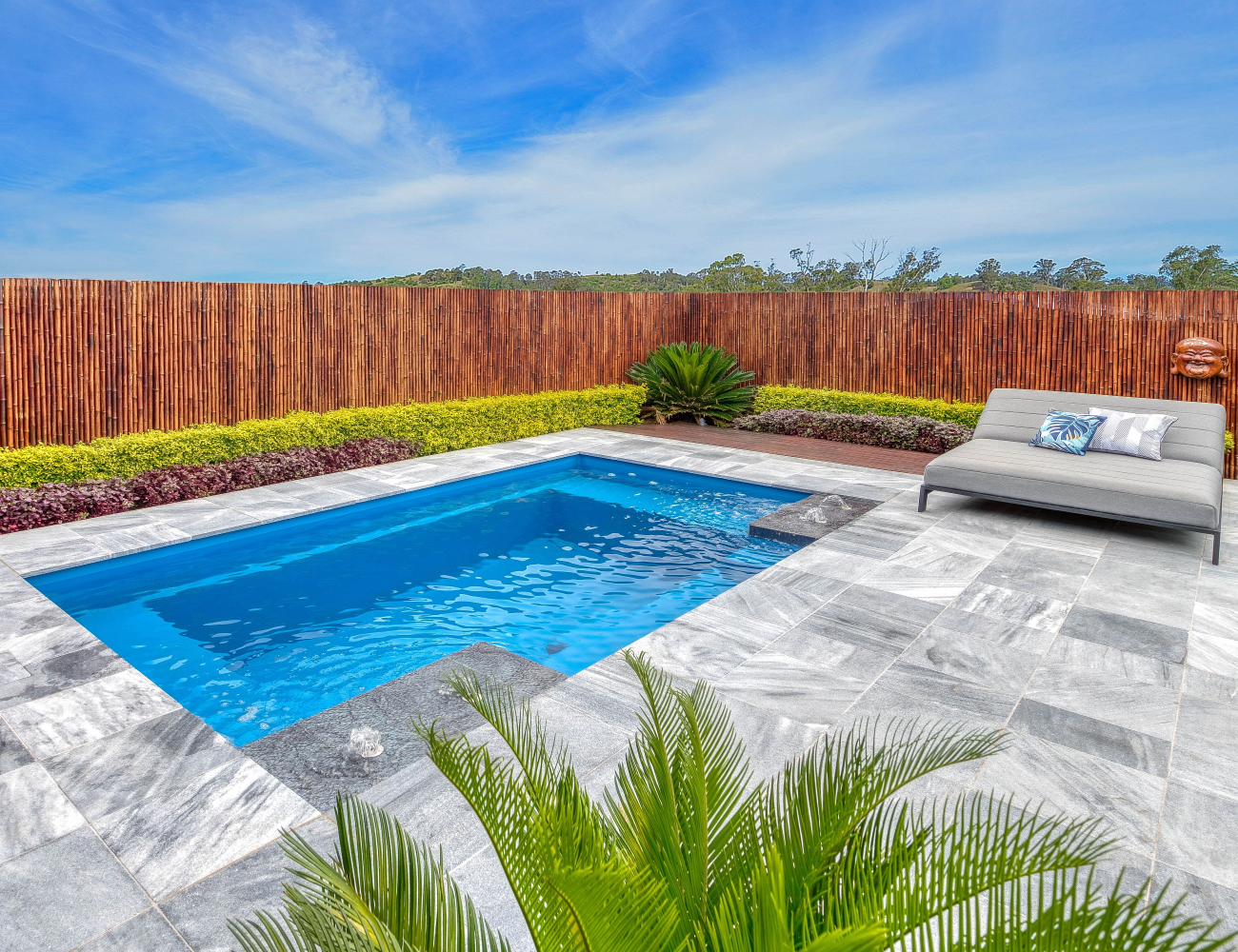
Fibreglass pools offer South Coast homeowners a durable, low-maintenance option thanks to their smooth, non-porous gel-coat finish. This surface naturally resists algae and needs fewer chemicals than a concrete pool, but regular cleaning is still essential to protect your investment. With proper care, a quality fibreglass pool stays beautiful for decades. This step-by-step guide covers the daily, weekly, and monthly routines that keep your pool sparkling, and explains how to tackle stains, scale, and seasonal challenges in the Illawarra and Shoalhaven.
Daily Pool Care
Spending just a few minutes each day stops problems from building up. Skim the surface with a net to remove leaves, insects, and debris before they sink. Check the water clarity at the same time — if it looks cloudy or dull, that can signal a chemical imbalance that needs attention. Daily skimming also reduces the load on your filter, so the whole system runs more efficiently.
Weekly Cleaning Routine
A thorough weekly clean keeps the gel coat looking like new and stops stains and algae from taking hold. Each week:
Brush the walls and floor
Use a soft-bristle brush made for fibreglass — hard or steel bristles will scratch the gel coat. Work from the waterline down, paying extra attention to corners and steps where debris collects. This is the single most important step for preventing stains and algae.
Vacuum the pool
Manual or automatic vacuuming lifts settled dirt from the floor. If you use a robotic cleaner, check it is rated as compatible with fibreglass surfaces to avoid scratching.
Empty the baskets
Clear leaves and debris from the skimmer and pump strainer baskets. Clean baskets let water flow freely and protect the pump.
Remove any leaf or organic stains promptly with a fibreglass-safe pool surface stain remover while the stain is still fresh — early action makes them far easier to lift.
Monthly Chemical Testing and Balancing
Balanced water keeps the pool safe to swim in and protects the fibreglass finish. Test at least once a month with a reliable kit and adjust as needed. The ideal ranges are:
| Parameter | Ideal Range |
|---|---|
| pH | 7.2 – 7.6 |
| Total Alkalinity | 80 – 120 ppm |
| Free Chlorine | 1 – 3 ppm |
| Calcium Hardness | 180 – 220 ppm |
Adjust total alkalinity first, because it buffers the pH — raise it with a pH increaser or lower it with a dry-acid product. If the pH is too high, use a pH decreaser to bring it down; high pH leads to calcium scaling that is difficult to remove. Keep calcium hardness within range, as very soft water can leach minerals from the gel coat. Run the pump 6 to 8 hours each day for proper circulation and filtration.
Dealing with Stains, Scaling and Scratches
Even with great care, stains sometimes appear. Here is how to handle the most common types:
Metal Stains
Rust or metal stains — often brown or green — can come from source water or metal fittings. Ascorbic acid (vitamin C) works well: rub a tablet directly on the stain and it usually disappears within minutes. This method is gentle on the gel coat.
Organic Stains (Leaves, Dirt)
Treat leaf stains and dirt marks as soon as possible. A pool surface stain remover formulated for fibreglass lifts organic discolouration. Before applying any solution, lightly moisten the wall so the product spreads evenly. A homemade mix of white vinegar and lemon juice also works for light organic stains.
Calcium Scaling
White or grey deposits along the waterline indicate scaling, caused by high pH or hard water. First, bring the pH into the 7.2–7.6 range with a pH decreaser. Once the water is balanced, the scale often loosens and can be brushed off with a soft brush. For stubborn scale, a fibreglass-safe chlorine-based liquid cleaner may help.
What to Avoid
Never use abrasive pads, steel brushes, or harsh acid washes on a fibreglass pool — they permanently damage the gel coat. Avoid draining the pool for routine cleaning, as the shell can be damaged by ground-water pressure. Always consult a professional before draining.
Seasonal Care – Autumn and Winter
As the seasons change on the South Coast, your cleaning routine should adjust too.
Autumn
Leaf fall is heavy in many Illawarra and Shoalhaven gardens. Clear leaves from the surface and skimmer basket more often to prevent staining at the waterline. Add a phosphate remover to stop algae feeding on organic matter. You can reduce pump run times slightly as the water cools, but never stop circulation entirely.
Winter
Fibreglass pools do not need draining over winter — in fact, draining can cause structural problems. Instead, keep the water balanced and run the pump for a shorter period, around 4 to 6 hours a day, to prevent stagnation. Continue testing monthly and brushing the walls every few weeks. A winter cover is optional but helps keep debris out.
Filter Maintenance
The filter is the heart of your pool system — keeping it clean makes everything else easier.
- Sand filters: Backwash every 4 to 6 weeks, or when the pressure gauge rises 8–10 psi above normal, to flush out trapped dirt.
- Cartridge filters: Rinse the cartridge with a garden hose every few weeks. Once a season (or when pressure climbs), give it a deep clean with a suitable filter cleaner.
Always turn off the pump before working on the filter system.
Shocking the Pool
After heavy use, a pool party, or a visible algae outbreak, shock the water to kill bacteria and boost chlorine. Use a chlorine shock product labelled safe for fibreglass pools and follow the dosage instructions carefully. Run the pump overnight, and do not swim until the chlorine level drops back to 1–3 ppm.

Frequently Asked Questions
How often should I brush my fibreglass pool?
Brushing the walls and floor once a week with a soft-bristle brush is recommended. This prevents algae, stains, and calcium buildup from becoming stubborn problems. Daily brushing is not necessary unless you have visible debris or an algae outbreak.
Can I use ordinary household cleaners on my fibreglass pool?
No. Household cleaners like bleach, ammonia, or abrasive powders can damage the gel coat. Stick to products specifically designed for fibreglass pools, such as chlorine-based liquid cleaners or a mild vinegar and lemon juice mixture for light stains.
What should I do if the pool water turns green?
Green water usually indicates algae growth. Check and adjust the chlorine level to 1 to 3 ppm and bring the pH to 7.2 to 7.6. Brush the walls and floor to dislodge the algae, then shock the pool with a chlorine product safe for fibreglass. Run the pump continuously until the water clears.
Is it safe to drain my fibreglass pool for a deep clean?
Draining is generally not recommended for routine cleaning because the shell can crack or lift out of the ground due to hydrostatic pressure. If you need a deep clean, consult your pool builder first. For most maintenance, follow the weekly brushing and chemical balancing routine instead.
Do I need to change my pump run time in winter?
Yes. As the water temperature drops, you can reduce pump run time to about 4 to 6 hours per day. However, do not stop running the pump entirely, because stagnant water can become a breeding ground for bacteria and algae.
Related Reading & Next Steps
Related Articles
Explore Our Services
Want a Fibreglass Pool That's Easy to Keep Clean?
Free site assessment. Comprehensive written quote. Lifetime structural warranty and finance through Handypay. Serving Wollongong, the Illawarra, and the Shoalhaven for over 35 years.