Concrete vs Fibreglass Pools NSW: Which Pool Type Is Right for Your Backyard?
A straight comparison of cost, installation time, maintenance, and durability — to help NSW homeowners make the right call.
Quick Answer: Concrete vs Fibreglass in NSW
Pricing updated for 2026. Your final installed price depends on the selected model, site access and confirmed scope.
Fibreglass pools cost $45,000–$70,000 installed and are swim-ready in 4–6 weeks. Concrete pools cost $55,000–$100,000+ and take 3–6 months. For most NSW families, fibreglass offers better value, faster install, and far lower ongoing maintenance.
The key advantage of concrete is unlimited shape customisation. If your block is unusually shaped or you want a completely bespoke design, concrete may be your only option. For 80%+ of standard backyards, fibreglass delivers equal or better results.
Over a 20-year period, fibreglass pools cost significantly less to own — no resurfacing ($5,000–$15,000 every 8–12 years for concrete), fewer chemicals, and less pump energy due to the smooth gelcoat surface.
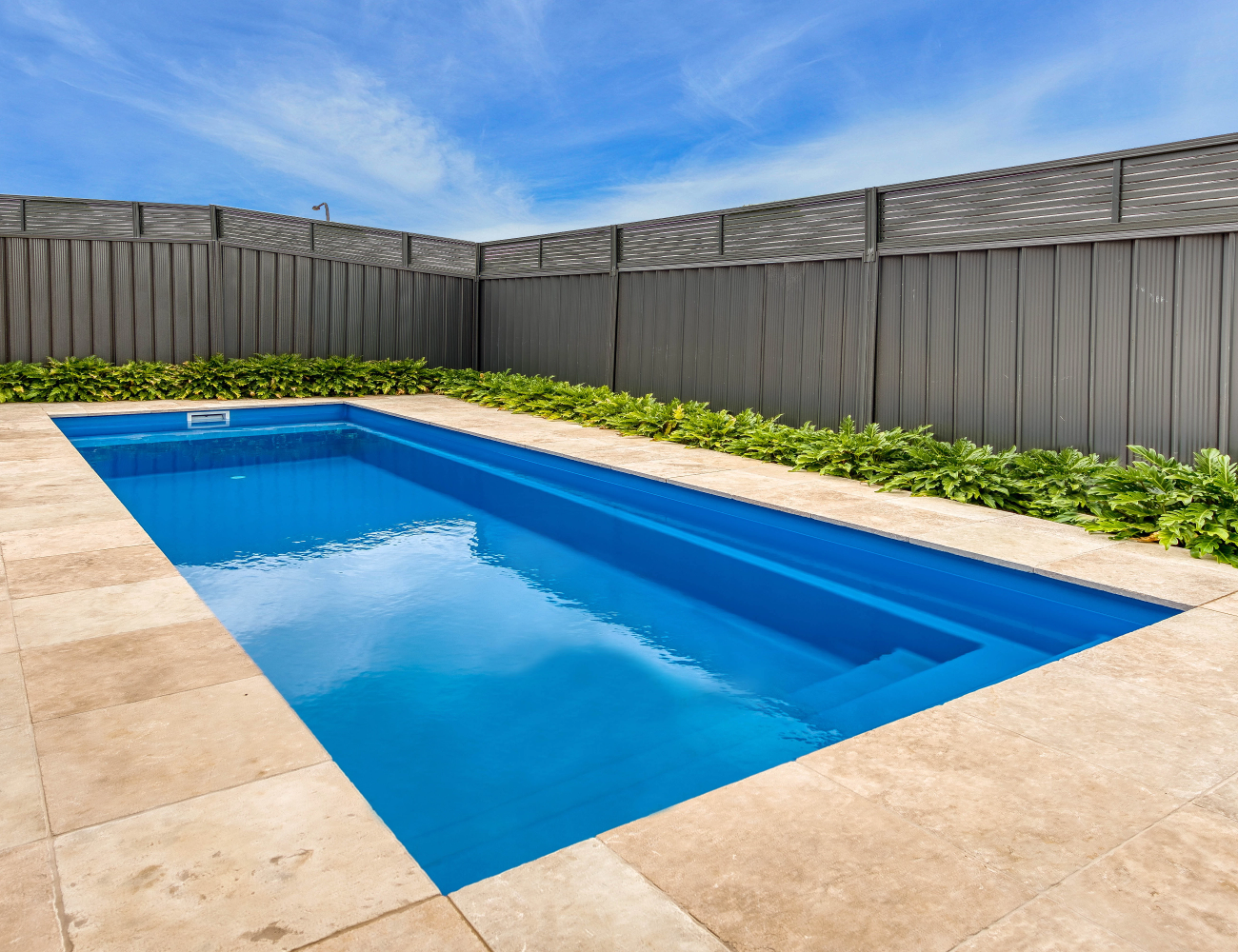
Choosing between concrete and fibreglass for your new pool is one of the biggest decisions you will make as a NSW homeowner. Both options can transform your backyard, but they differ sharply in cost, installation time, maintenance, and long-term durability. In fact, more than 80 per cent of new in-ground pools in Australia are now fibreglass or concrete, with vinyl liner pools making up the remainder. So which material suits your budget, lifestyle, and property? This guide compares the two using real data from NSW installations.
Understanding the Two Main Pool Materials
Concrete Pools: Built from the Ground Up
A concrete pool is constructed on-site using steel reinforcement and shotcrete or gunite. The shell is then plastered, tiled, or finished with a pebble coating. Because the shape and size are fully customisable, concrete pools can fit almost any block, even steep slopes or narrow side access. However, this flexibility comes at a price. Concrete pool costs are generally higher than fibreglass, and the full installation process can take three to six months. After the shell is built, the surface requires ongoing upkeep and resurfacing every 8–12 years.
Fibreglass Pools: Pre-Manufactured and Fast to Install
Fibreglass pools arrive as a complete one-piece shell, manufactured in a factory and delivered to your property. Fibreglass pool installation is much quicker — often four to six weeks from excavation to swim-ready water. The gelcoat finish is non-porous, which means less chemical demand and fewer hours spent on pool maintenance. While you cannot alter the shape of a fibreglass pool after it leaves the factory, today's models come in dozens of designs, from plunge pools to large family entertainers.
Pool Types Comparison: Key Differences at a Glance
| Factor | Concrete Pools | Fibreglass Pools |
|---|---|---|
| Average cost (installed) | $55,000 – $100,000+ | $45,000 – $70,000 |
| Installation time | 3 – 6 months | 4 – 6 weeks |
| Shape customisation | Unlimited (any size or shape) | Limited to factory moulds |
| Surface finish | Plaster, pebble, or tile | Gelcoat (smooth, non-porous) |
| Maintenance effort | High — brushing, resurfacing every 8–12 years | Low — minimal brushing, fewer chemicals |
| Lifespan | 30 – 50 years with good care | 25 – 40 years (shell warranty often 25 years) |
| Upfront deposit | Higher (multiple trades, engineering) | Lower (single shell + installation) |
Cost Breakdown: Concrete vs Fibreglass Pools NSW
Concrete Pool Costs
Expect to pay between $55,000 and $100,000 for a standard concrete pool in NSW, with premium finishes or complex shapes pushing the total higher. The cost includes excavation, steel reinforcement, shotcrete, plastering, tiling, and basic equipment.
Additional expenses often arise from rock removal, retaining walls, and council approvals, which can easily add $10,000–$20,000. Because concrete pools require multiple trades, the project management burden is higher and cost variations are more common.
Fibreglass Pool Costs
A mid-range fibreglass pool installed in NSW typically costs $45,000 to $70,000. The price includes the shell, delivery, excavation, plumbing, electrical connections, coping, and basic landscaping.
Because the shell is factory-made, there are fewer variables on site, so quotes tend to be more accurate. Financing options like swim now pay later make it easier to manage the upfront investment.
Long-Term Value
While concrete pools can last longer with diligent care, fibreglass pools require less ongoing expenditure on chemicals, electricity, and resurfacing. Over 20 years, the total cost of ownership for a fibreglass pool is often lower — even if the initial price is comparable. Factor in the lifetime operating costs, not just the build price.
Installation Time and Process
Fibreglass Pool Installation
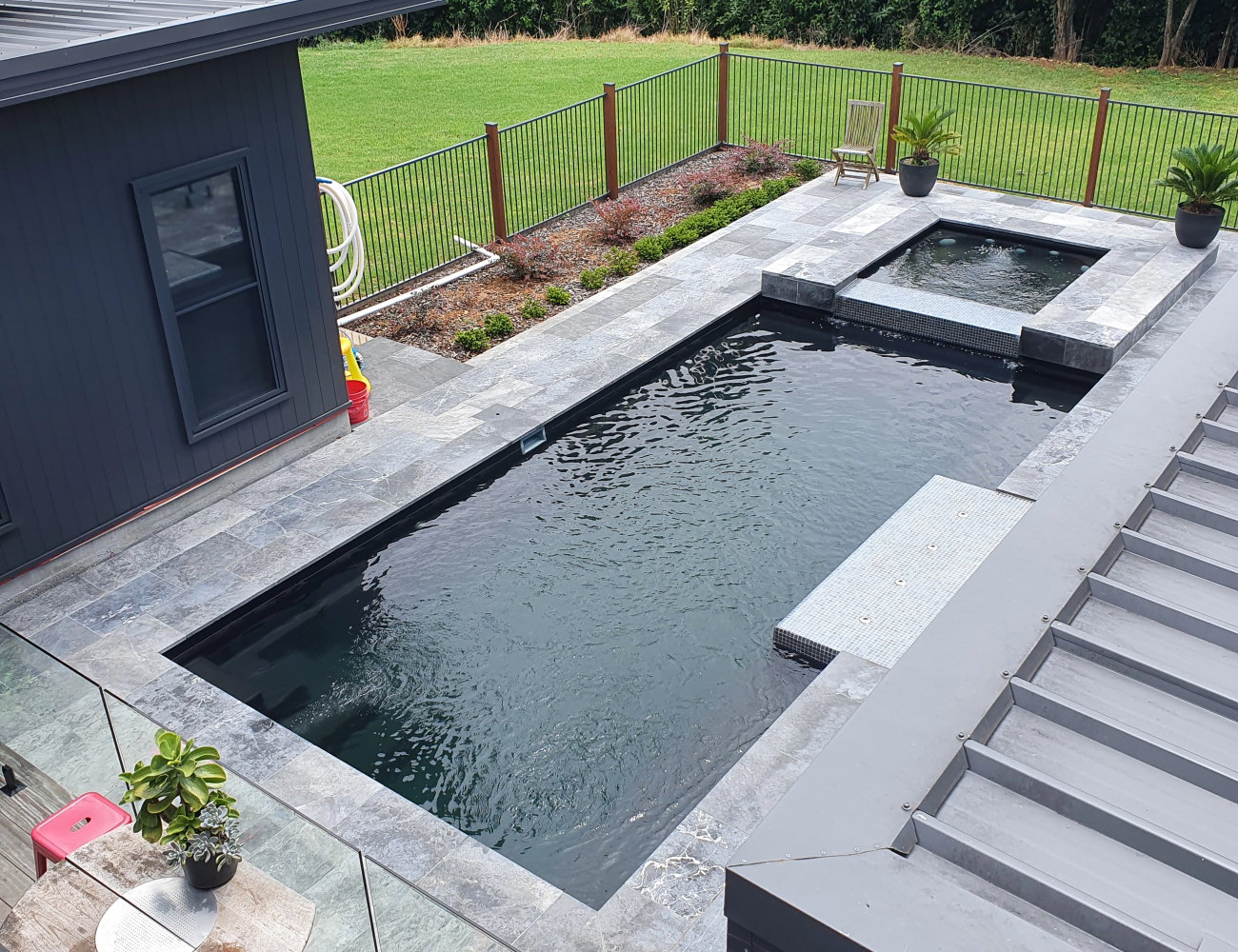
Once your site is prepared and council approvals are obtained, fibreglass pool installation moves fast. The hole is dug, the shell is lowered in, plumbing and electrical connections are made, and backfilling occurs — all within a few days. Most installations are complete in four to six weeks from excavation to swim day. Because the gelcoat surface does not require curing like plaster, you can swim sooner.
Concrete Pool Construction
Concrete pools involve a longer sequence: excavation, steel fixing, gunite or shotcrete spraying, curing (often 28 days), tiling or plastering, then filling and balancing. Weather delays are common. A concrete build can take three to six months or more. In coastal areas like Wollongong or the South Coast, high winds or rain can push the schedule further.
Maintenance and Long-Term Care
Pool maintenance is an area where concrete and fibreglass diverge sharply.
Concrete pools have a porous plaster surface that harbours algae and requires weekly brushing, regular acid washes, and vigilant chemical monitoring. The water's pH and calcium hardness need constant balancing to prevent staining and etching. Over time, the plaster cracks or becomes rough, necessitating resurfacing every eight to twelve years — a $5,000–$15,000 job.
Fibreglass pools, by contrast, have a smooth, non-porous gelcoat finish that resists algae growth. Chemical demand is lower, and the surface can keep its colour and shine for decades without major renovation. A simple robotic cleaner and basic weekly testing are usually enough. For busy families, fibreglass's low upkeep is a strong advantage.
Durability and Lifespan in NSW Conditions
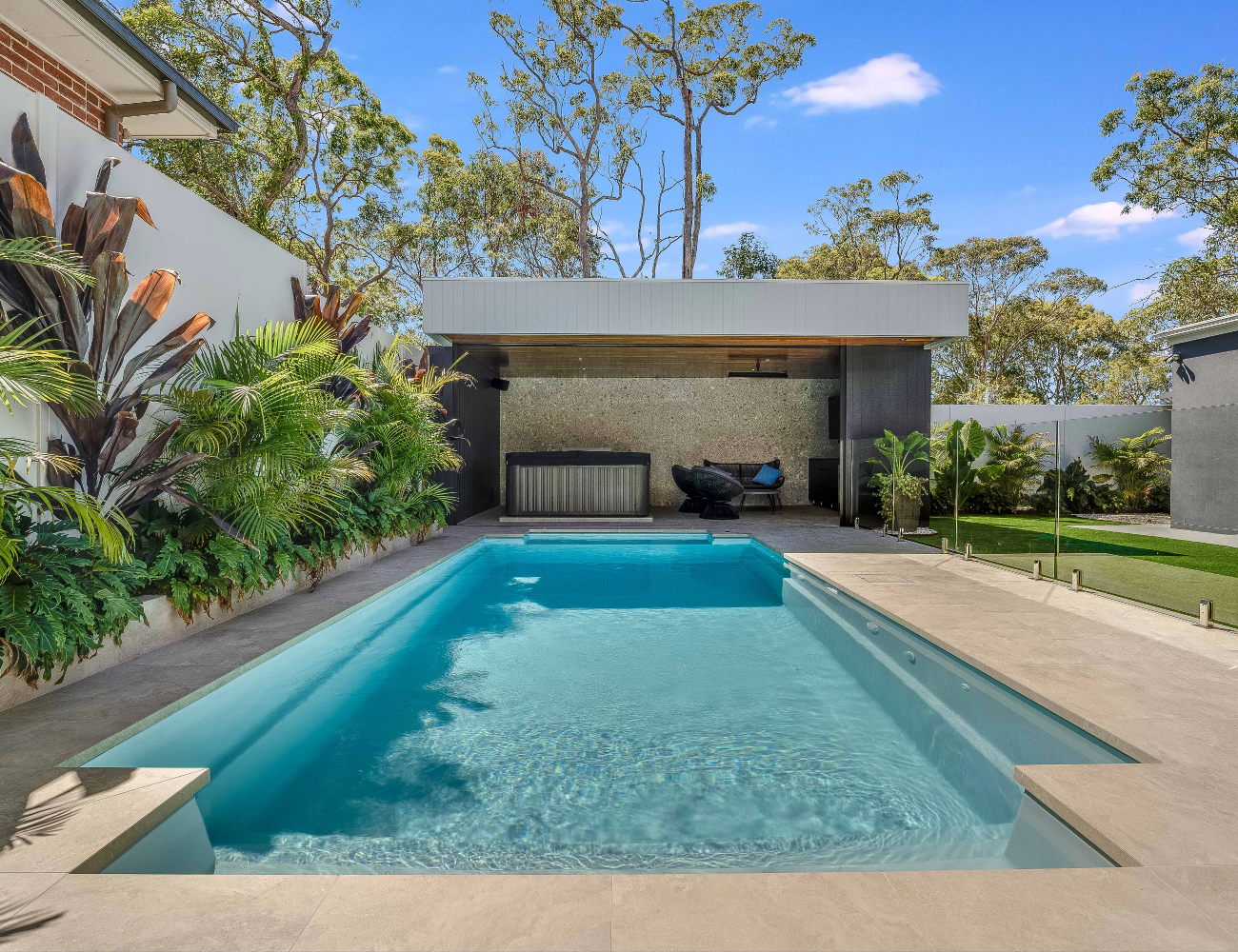
Both materials hold up well in Australia's climate, but there are nuances. Concrete is susceptible to cracking if the ground shifts or if expansion joints are not properly installed. In areas with reactive clay soils — common in parts of Sydney and the Illawarra — concrete pools may develop structural cracks that are expensive to repair. Fibreglass is flexible, so it moves with minor ground shifts without cracking. However, fibreglass shells can be damaged by harsh pool chemicals if the water is left unattended. Proper care ensures either material will serve you well for decades.
Aesthetics and Customisation
Concrete offers unlimited shape possibilities: freeform, lap lanes, vanishing edges, integrated spas, and more. You can choose mosaic tiles, pebblecrete, or quartz finishes. If your block is unusually shaped or you want a truly unique design, concrete is the only way to go.
Fibreglass pools come in a set of pre-designed moulds. However, the range has expanded dramatically. Manufacturers now produce geometric rectangles, curved lagoons, plunge pools, and dual-depth sport pools. Most homeowners find a model that fits their yard perfectly. Browse our fibreglass pool designs to see the full range available through Integrity Pools.
Environmental and Resale Considerations
Fibreglass pools have a smaller carbon footprint during construction because the shell is made in a controlled factory with less waste. Concrete pools require significant amounts of cement, which has high embodied energy. For resale, well-maintained concrete pools can add value, but a fibreglass pool with a modern, clean-lined shape is equally attractive to buyers — especially because they know maintenance will be simpler.
Which Pool Material Should You Choose?
Choose Fibreglass If…
- You want a fast install (4–6 weeks vs 3–6 months)
- You want a predictable, lower upfront budget
- Low chemical and cleaning effort matters to you
- You want a long-lasting gelcoat finish with no resurfacing
Choose Concrete If…
- You have a complex or unusually shaped block
- You want a completely bespoke shape or finish
- You prefer mosaic tile or pebblecrete finishes
- Build time and higher maintenance is acceptable
Before making a final call, talk to experienced NSW pool builders who can assess your block, discuss your budget, and show you examples of both types. A free site assessment can reveal unexpected constraints — like rocky ground or narrow access — that might push you one way or the other. Contact Integrity Pools to book yours.
Frequently Asked Questions
Which is cheaper to install — concrete or fibreglass?
Fibreglass pools are generally cheaper upfront, costing $45,000 to $70,000 compared to $55,000 to $100,000+ for concrete. The difference grows when you include site works and finishes.
How long does an average fibreglass pool installation take?
Most fibreglass pool installations in NSW take four to six weeks from excavation to swim-ready water. That includes council approvals, which add a few weeks beforehand.
Do concrete pools last longer than fibreglass pools?
Concrete pools can last 30 to 50 years with proper care, while fibreglass pools typically last 25 to 40 years. However, concrete pools require resurfacing every 8–12 years, which adds significant cost over time.
Can I install a concrete pool in a small backyard?
Yes, concrete pools can be shaped to fit almost any block, including narrow side access. Fibreglass pools also come in compact models like plunge pools, so both can work in small yards.
Which pool type is easier to maintain?
Fibreglass pools are significantly easier to maintain. The smooth, non-porous gelcoat surface resists algae and requires fewer chemicals. Concrete surfaces need weekly brushing, acid washing, and resurfacing over time — adding cost and effort throughout the pool's life.
Related Reading & Next Steps
Related Articles
Explore Our Services
Thinking About a Fibreglass Pool in NSW?
Integrity Pools specialises in premium fibreglass pool installation across Wollongong, the Illawarra, Shoalhaven, and South Coast. Get a free site assessment and itemised quote today.